Why it matters
PXRD is powerful. Interpreting it at scale has been hard.
Powder X-ray diffraction is a foundation of materials characterization, yet conventional search–match and refinement workflows need time and expert intervention. XQueryer is designed as an intelligent identifier for AI-driven laboratories, delivering structural information directly from PXRD data.
01 · High-fidelity simulation
Train on the physics behind the pattern.
The simulation pipeline models both intrinsic sample properties—such as atomic diffraction, grain size and orientation—and extrinsic instrument effects including vibrations, scattering and noise. Twenty-three variants per structure create a diverse training set that better spans experimental reality.
- Crystal structure + X-ray conditions
- Physics-guided PXRD simulation
- High-fidelity data for robust learning
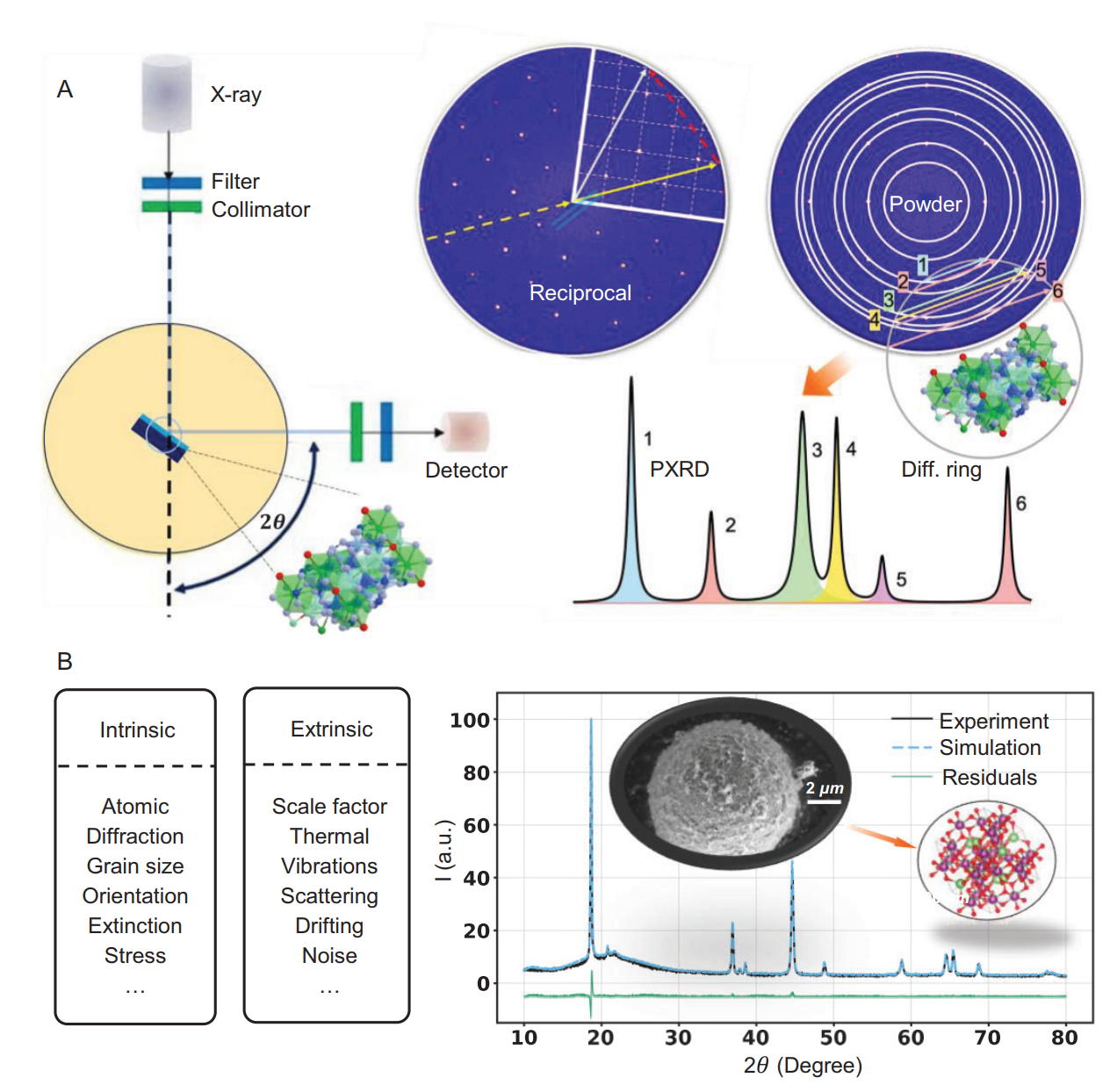
PXRD theory and the simulation factors represented in the study.
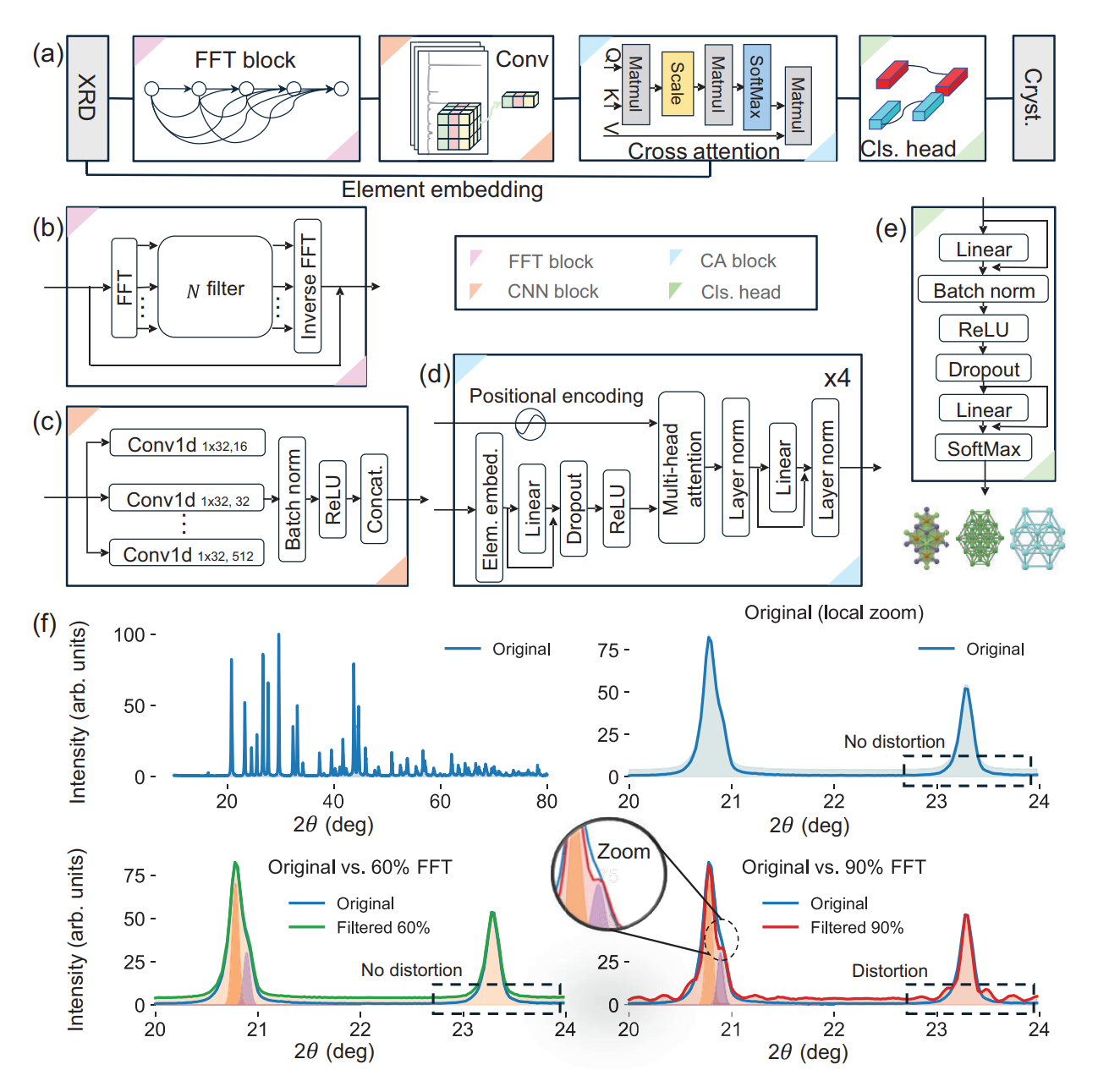
FFT filtering, CNN features, cross-attention and crystal classification.
02 · Model design
Separate the signal from the noise.
XQueryer combines an FFT block, CNN block, cross-attention block and classification head. Frequency-domain filtering helps reduce noise and peak overlap while preserving information the model needs to distinguish crystal structures.
03 · Results
A clear gain on simulated and experimental data.
Across more than 200,000 simulated test patterns, XQueryer improved structure-identification accuracy by 28.9% over the next best model. On the RRUFF experimental benchmark of 1,003 patterns, it achieved 70.3% accuracy and 69.8% macro F1.
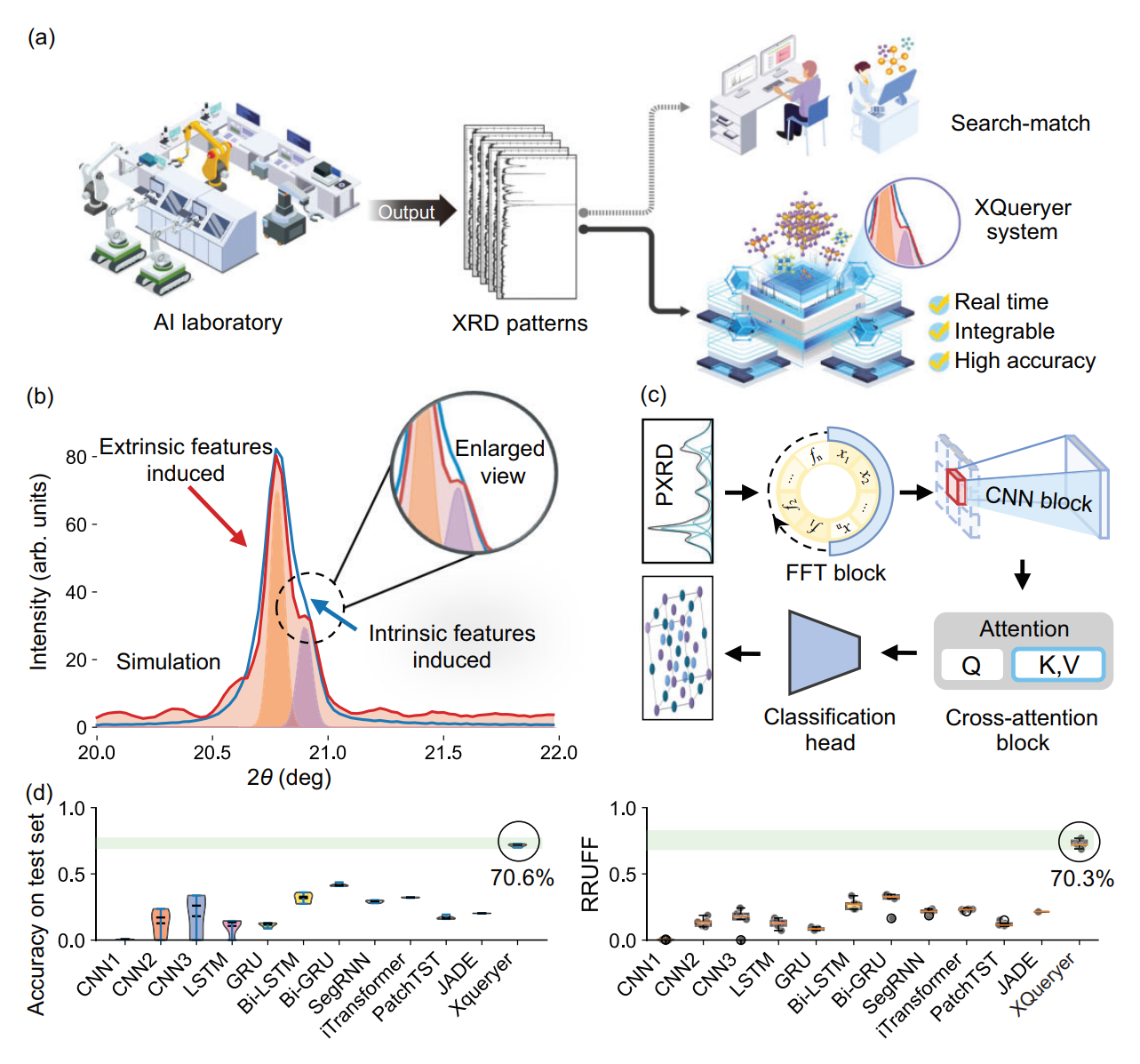
The system concept, simulation input and comparative performance in the paper.
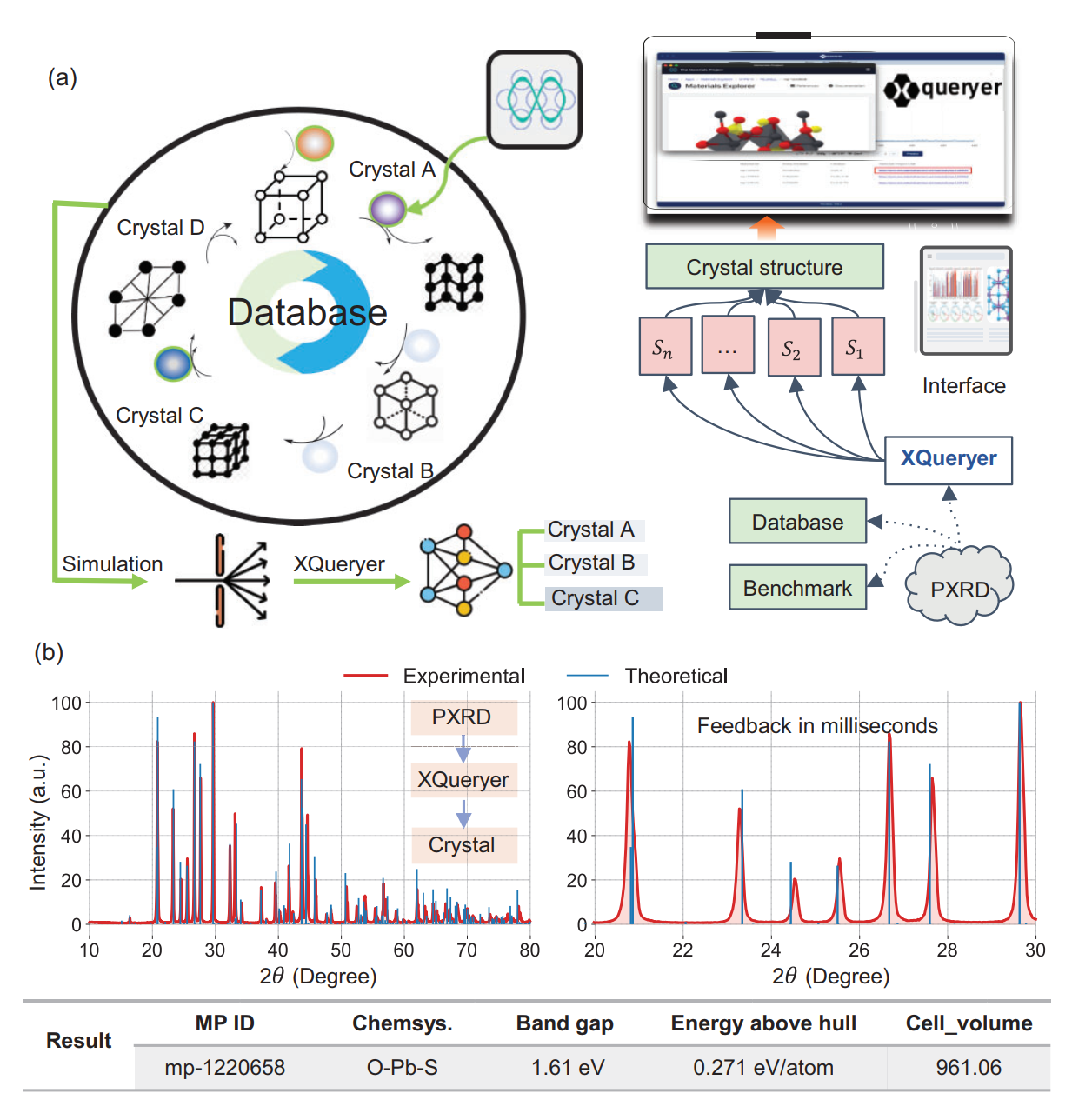
From raw PXRD measurement to material information and recommendations.
04 · In the laboratory
From diffractometer to answer in milliseconds.
The authors integrated XQueryer with a PANalytical Aeris benchtop diffractometer. When a scan produces a new file, the system detects, parses and identifies the pattern automatically, then returns crystal and Materials Project information for downstream optimization workflows.
Scope & next steps
A strong single-phase foundation—with room to grow.
The current work addresses single-phase patterns. Extending it to multi-phase identification, broadening database coverage and linking identification with subsequent refinement are the authors’ key future directions.